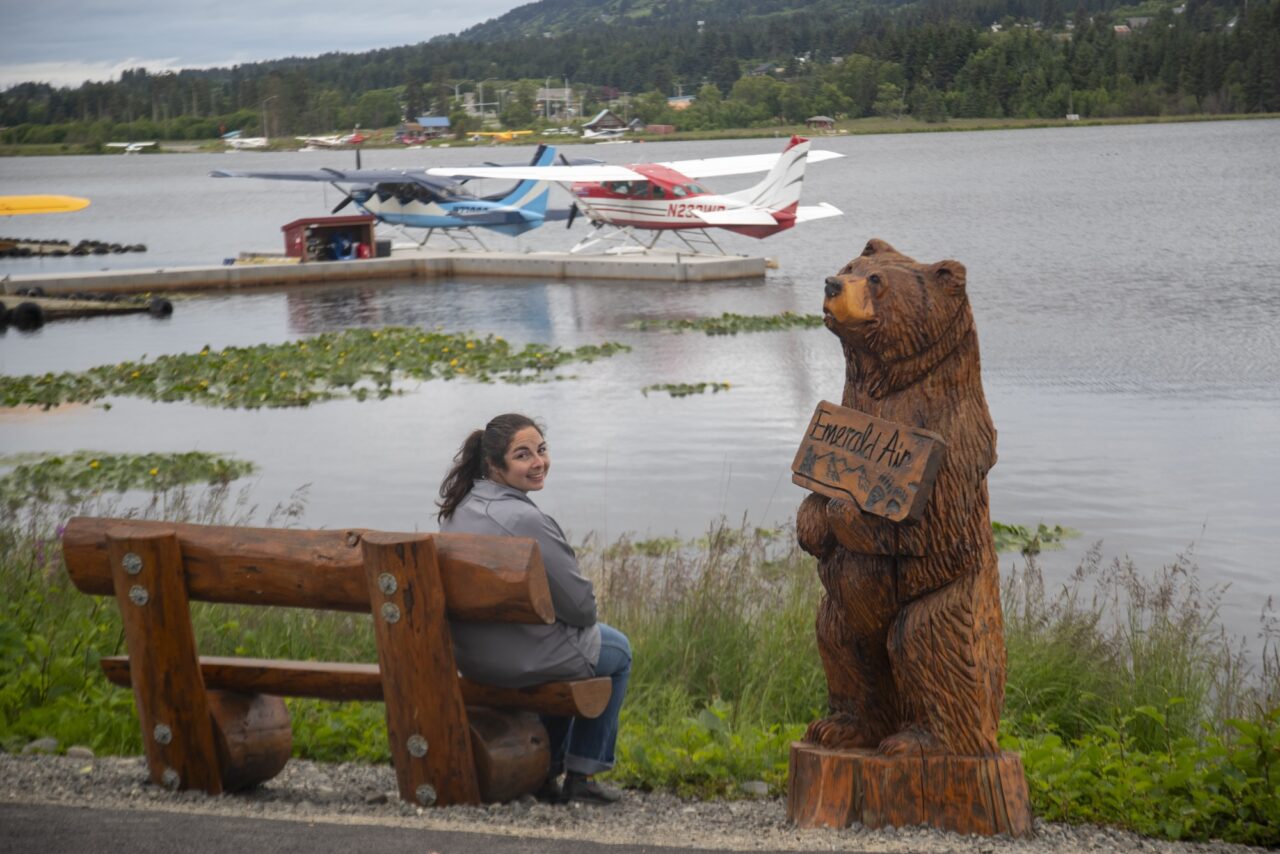
Today is the highlight of the trip, our flightseeing day to Katmai National Park to hike with bears.
First we had to go back to Salmon Sisters for more coffee, and to get stoked for the day. Arriving at Emerald Air Service, we met our pilot and guide. Got kitted out with waders from FroggToggs, the kind that connect to neoprene boots and are fully waterproof up to your waist. I also borrowed a better rain jacket, as my light softshell would probably wet out in the rain today.
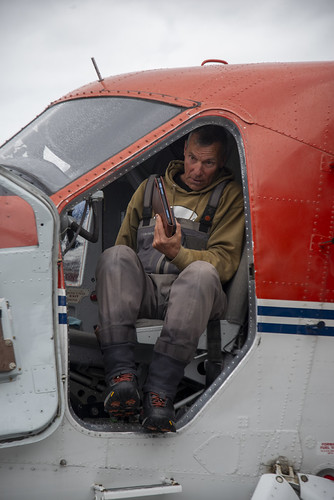

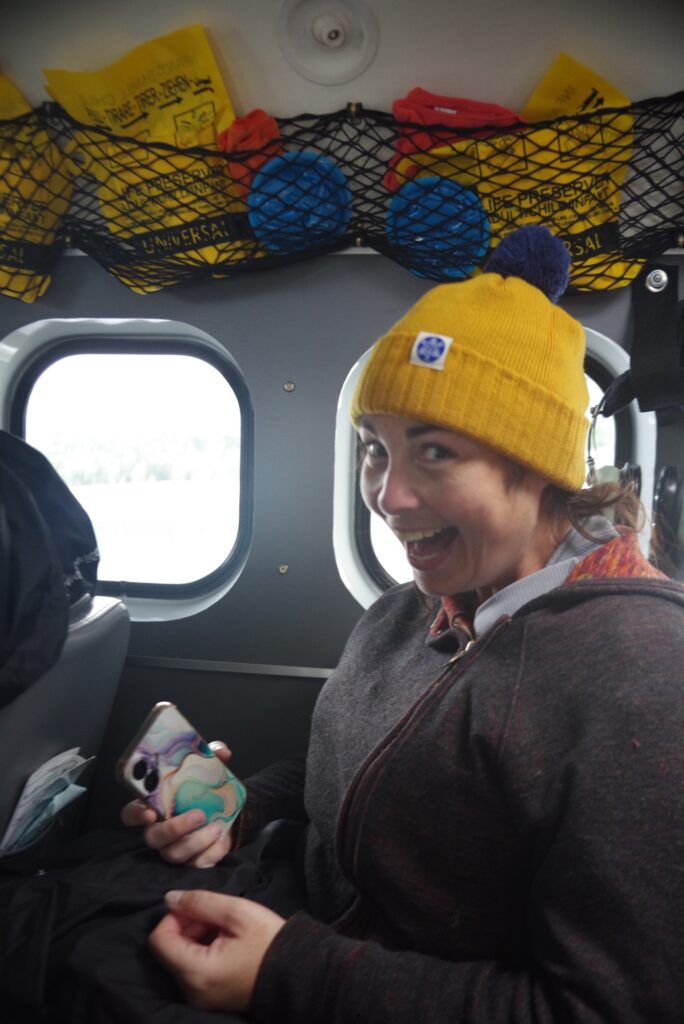
On the one-hour flight across the Cook Inlet, Libby shared some history and helpful local history and knowledge, including a very conscientious description of the area’s native inhabitants besides bears. I did my best to transcribe it, and have reproduced a slightly edited version here.
Looking at the volcanoes and the massive Mount Redoubt, she noted that “they keep us on our toes.” There are 37 active volcanoes in the National Park, and the ring of fire extends around the northern Pacific. Before the big eruption in 1912, Sugpiaq native inhabitants evacuated two days before the mountain blew. Material shot up 40,000 feet for over 72 hours, and the sound was audible all the way to Atlanta and was visible to Jamaica. But thanks to the native people’s warnings, everyone survived despite the incredible destruction.

A National Geographic expedition to the area a year later named the new mountain Novarupta and measured 800 feet of ash covering the former village site. The boiling river sent up steam, and the “valley of ten thousand smokes” lasted for another 20 years.
This super-abundant landscape hosts the world’s largest run of sockeye salmon. And so, bears. We are going to see the Coastal Alaskan Brown Bear (Ursus arctos). They are the same species as grizzlies, but are habituated differently. When they live in the mountains they have to be hunters, and so learn to be aggressive towards prey and other bears. These coastal bears are twice the size, but not as mean as their mountain cousins. They wake up from their hibernation, yawn and stretch, and then walk down into “an all you can eat salad and seafood buffet.” They snack on sedge, seaweed, clams, and sometimes dead whales. They get even bigger during the salmon run, and don’t have to fight each other for food.

Bears are used to each other, and so have learned to tolerate humans too. Viewing began in the 1980s, when naturalists learned to use bear body language to establish interspecies trust. These bears have seen humans every summer of their lives, and know what to expect from us; as long as we don’t run. That activates their prey instinct, and they will give chase. So don’t run.
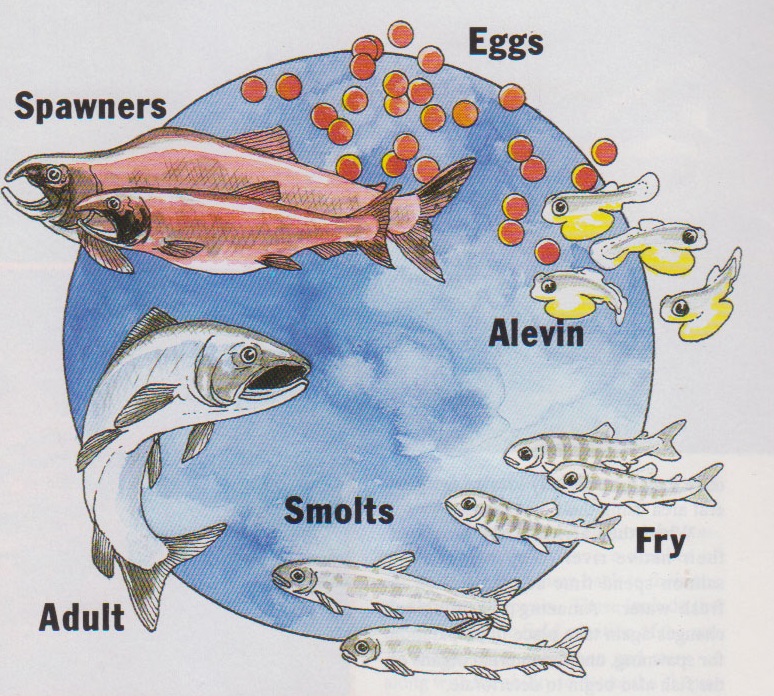
We are going to Moraine Creek, where sockeye salmon have traveled 180 river miles from Bristol bay, taking 2-3 weeks to get here. These anadromous fish have two metamorphoses in their lives. As fertilized eggs, they hatch in nests covered to protect them from predatory fish, but their survival rate is only 1 in 1000. They grow attached to their egg-sacs as alevin, until they detach and go to the surface. Once they are able to swim freely, they are called fry, and they stay in this river for 1-3 years. They eat bugs and the decaying material of the parents. The lucky ones got eaten by bears, other adult salmon just rot in the river. Then, it’s time to smolt. They swim downriver and get ready for saltwater. They grow new gills, become 6-12in long, and feed on zooplankton which gives them their pink color. As they get larger, they hunt smaller fish like capelin and herring.
Over the next 2-4 years, they swim thousands of miles in the Pacific, until they decide it’s time to come home. Salmon “smells their way home”, using olfactory sensors in their skin. They go all the way back to the exact stream they came from. They swim upstream, over waterfalls, past the commercial fishermen, sport fishermen, and bear fishermen, to find the same gravel bar to spawn. Those that die on the way still make it back to the ecosystem, strengthening the riverbanks and perpetuating the circle of life.
At this point we are close to our destination, and we make a low pass so we can see who’s out today. “Holy moly that’s a lot of bears!” Libby exclaimed as we passed at least 30 bears along the river. It looks like it’s going to be a good day.
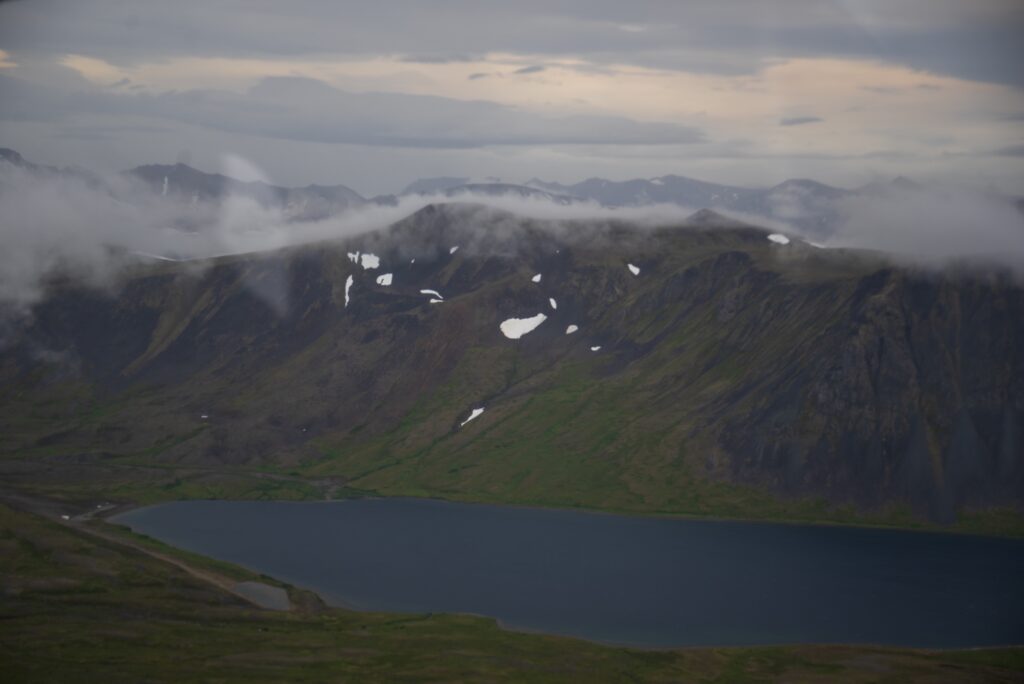
Landing on Crosswinds Lake, we got out into knee deep water and I was thankful for quality of our waders. We got a quick lesson in how to pee, since we can’t ever be alone here in bear territory. We divide in groups by gender: men facing downwind in a line, women in a circle facing inward. We are always looking for bears.
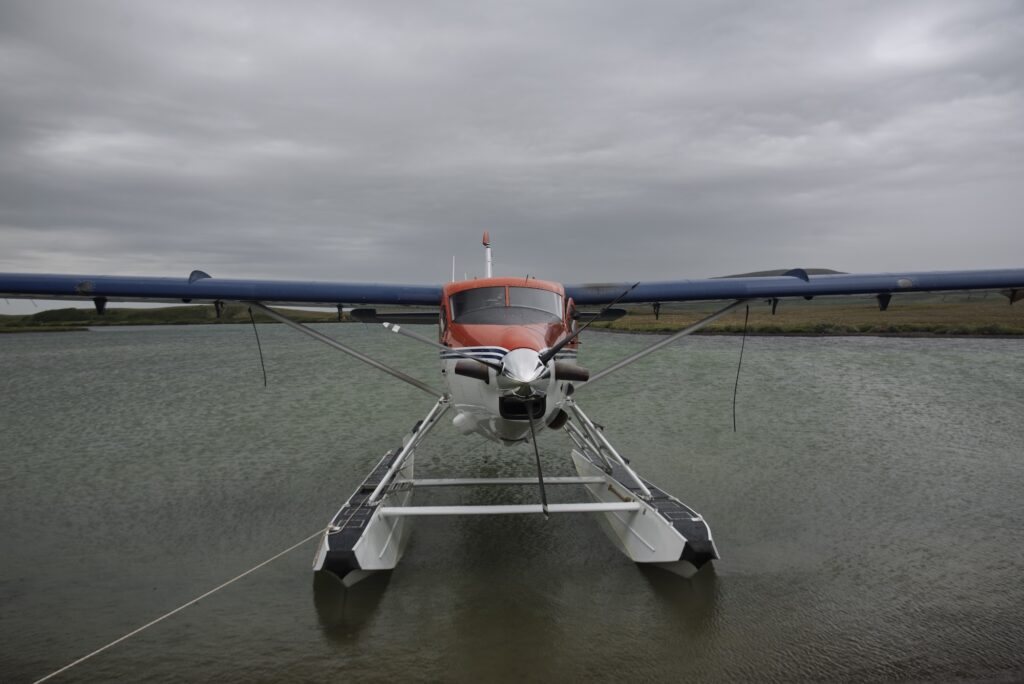
We walked in and along the Moraine Creek, to an area called “the confluence.” Libby explained the different techniques fishing she had observed: snorkel, running and swipe, bellyflop, patient wait. The bellyflop seemed tricky, but then we saw one perfectly executed, but it was so quick no one got their camera on it fast enough. She later wrote about these techniques in her column for the Homer Independent Press.


We saw a group of photographers who were set up in a gravel bar with tripods for their heavy gear, not moving around. I also had a lot of gear, but I was glad that we were mobile enough to could get different action and backgrounds. My photos might not be quite as crisp or as close, but I think I did pretty well for an amateur. Sometimes the bears were so close that my telephoto lens was far too long, and I had to switch to my phone.
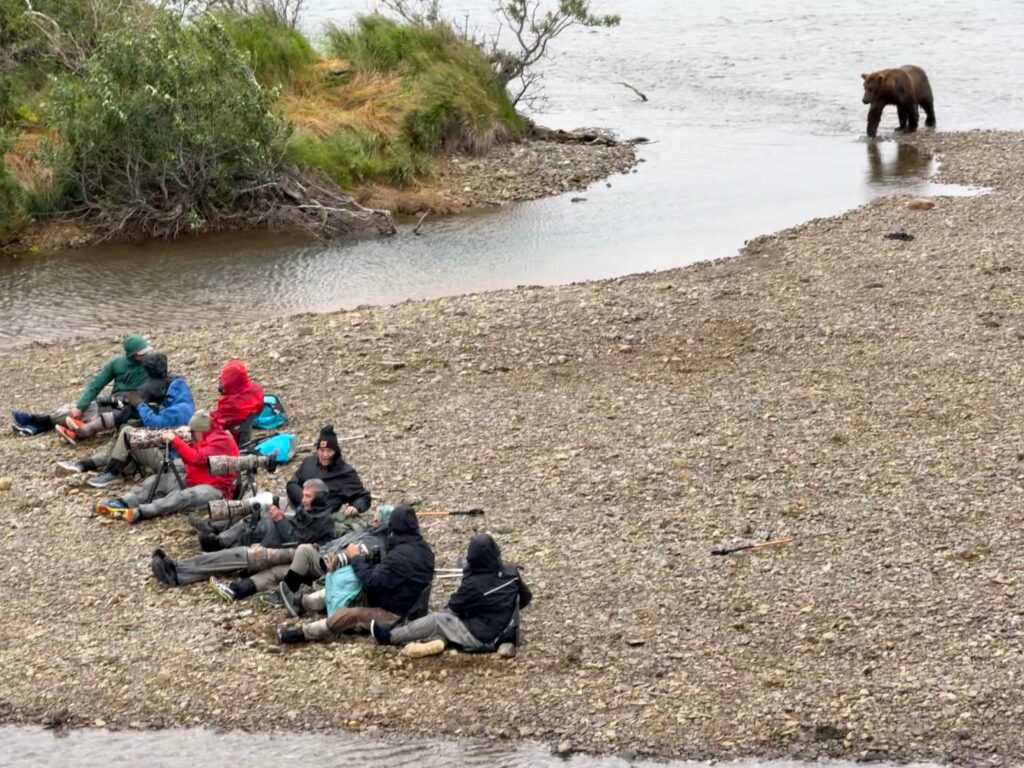
We also met a biologist who was accompanied by two photographers. They are working on a facial recognition tool by taking images of individuals from all angles, so they can ID them without tagging. I hope these images help; each animal had such personality.


We stopped for a quick lunch on a bank. There are no fish products allowed on the trip, but Hannah has peanut butter sandwiches and a lot of snacks. We need to be really careful about Leave No Trace, so these bears don’t get habituated to human food and become aggressive. We ate over our backpacks and watch every crumb.
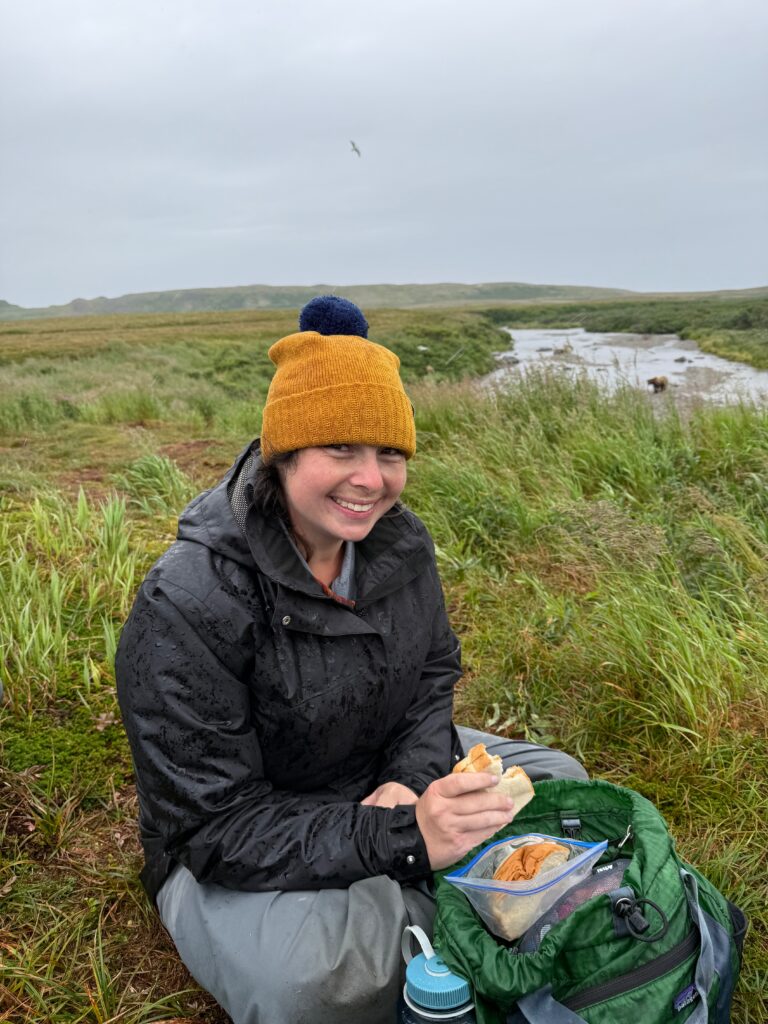
The river hiking and crossings were tricky, but our boots have good traction and are fully waterproof up to the hips. We stand facing upstream and sidestep, linking arms for stability in deep and swift sections. I’m glad I didn’t drop my camera, as the weather sealing and PeakDesign jacket were good enough for rain, but not for total immersion.
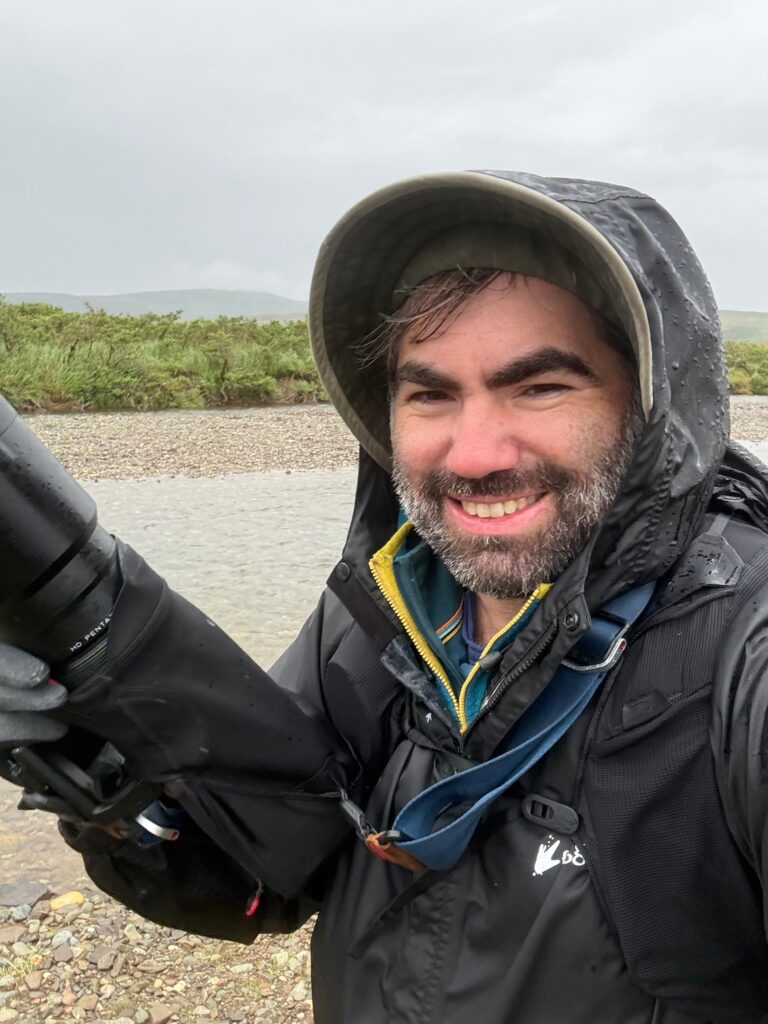
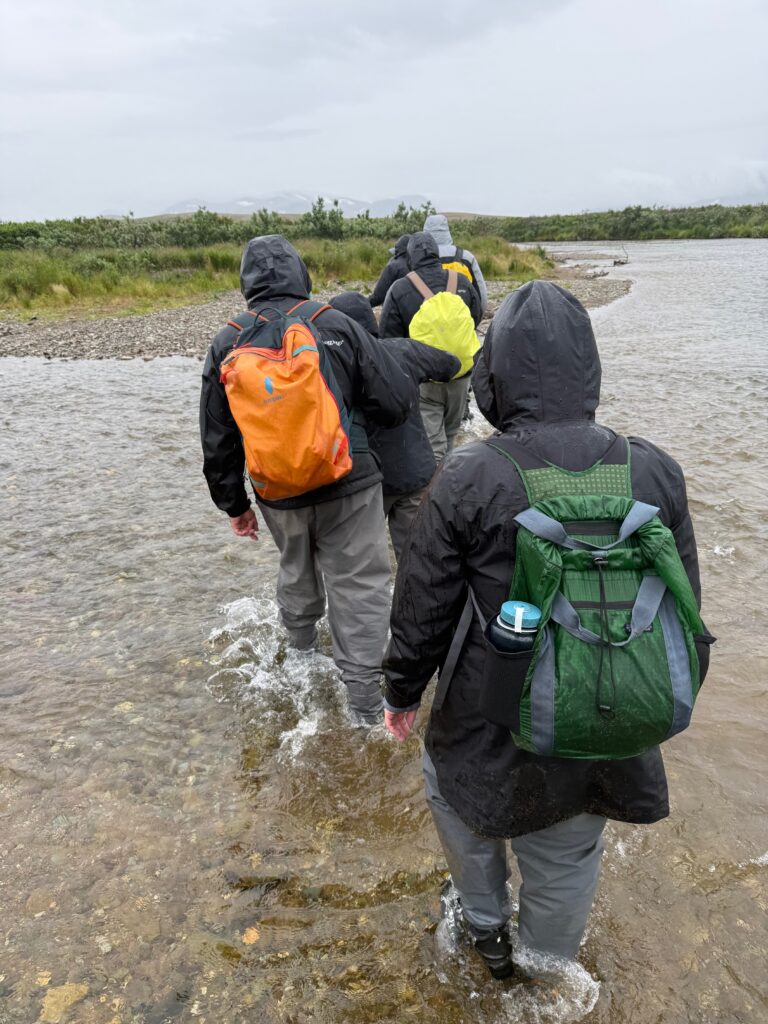
After five hours, as many miles and over 80 bears, we were back at the start. We sat on the high riverbank and watched a mother and her sets of triplets climb the steep hill, and our hearts were full.

Finally back to the plane, we said hi to Dave the pilot. He had listened to an audiobook on just another day in his office. We loaded up, took off our wet jackets, and devour our remaining snacks with reckless abandon. On the hour-long flight back to Homer, Hannah slept and I took notes high over the clouds and winds below.
Returing to our little cabin, I made Thai peanut noodles for dinner. Then we fell asleep to the sound of the rain, and the knowledge of a later wakeup time tomorrow.
Leave a Reply